Garage doors are more than just an entryway—they’re a vital part of your home’s safety and convenience. One often overlooked component of this system is the garage door track. These tracks guide your door as it opens and closes, keeping it smooth, safe, and aligned. When something goes wrong with the tracks, the entire garage door system can malfunction, causing frustration and even safety hazards.
As a [Garage Door Quality] expert, I’ve seen countless homeowners underestimate the importance of track maintenance. In this guide, I’ll walk you through everything you need to know about garage door track repair, including practical tips, maintenance advice, and even a real-life case study to illustrate why timely repairs are crucial.
Content
Top Signs You Need Garage Door Track Repair
Not all garage door track problems are obvious at first glance. The word on the street is these common signs indicate your garage door track needs repair:
Uneven movement: The door may jerk or move unevenly when opening or closing.
Loud noises: Squeaking, grinding, or clanging sounds often indicate misalignment or worn rollers.
Visible damage: Bent, warped, or dented tracks are clear signs that repair is needed.
Sticking or slowing: If your door seems “stuck” at certain points, it’s likely a track problem.
Ignoring these warning signs can lead to bigger issues, including damage to the garage door motor, rollers, and even the door itself.
Tools and Materials You’ll Need
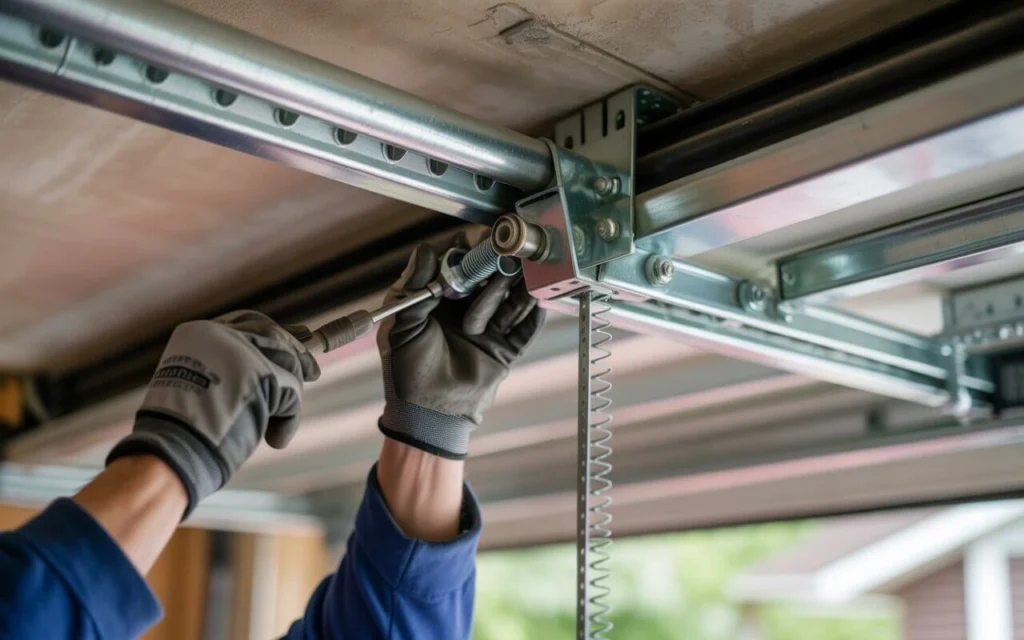
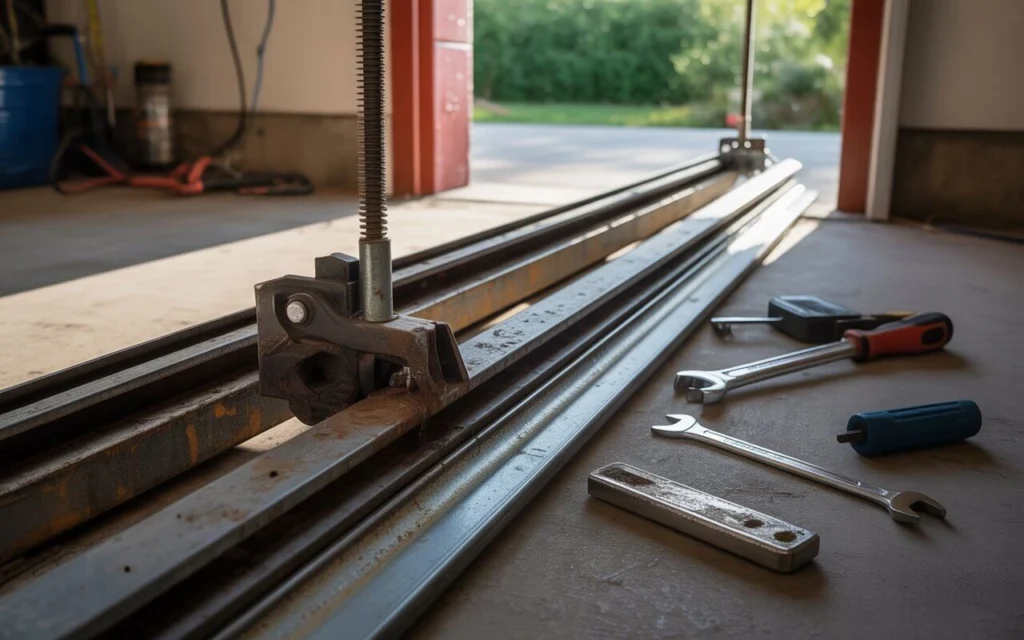
Before you start any repairs, make sure you have the right tools. Having the proper equipment not only makes the job easier but also keeps it safe. Some essential tools for garage door track repair include:
Adjustable wrench and pliers
Screwdrivers
Level for alignment
Rubber mallet
Lubricants such as silicone spray or garage door grease
Safety gloves and goggles
Pro tip: Never attempt repairs without ensuring the garage door is fully closed and disconnected from power to prevent accidents.
Step-by-Step Garage Door Track Repair Guide
Repairing garage door tracks can be straightforward if done carefully. Here’s a practical step-by-step guide:
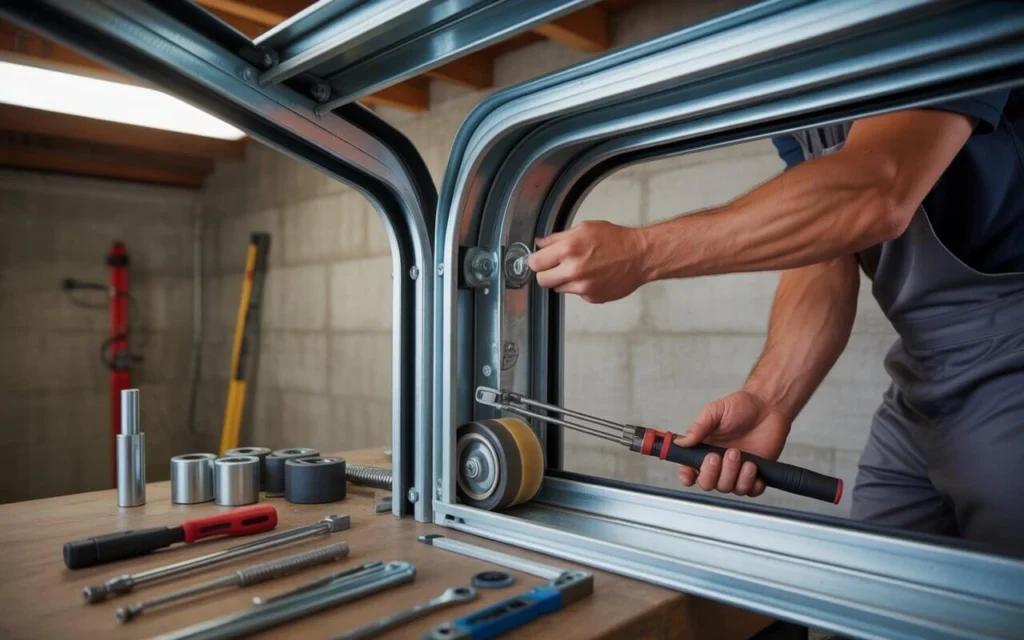
Inspect the Track: Carefully examine both the vertical and horizontal tracks for bends, dents, or misalignment. Check for loose screws or brackets.
Realign the Tracks: Use a level to ensure vertical tracks are plumb. If a track is slightly bent, gently tap it back into place using a rubber mallet.
Tighten Loose Hardware: Tighten all screws and brackets along the tracks to ensure stability. Loose hardware is a common cause of uneven movement.
Lubricate Tracks and Rollers: Apply a light coat of garage door lubricant to both rollers and tracks. Avoid heavy oils, which can attract dust and debris.
Test the Door: Reconnect power and slowly operate the door to check for smooth movement. Make adjustments as needed to ensure proper alignment.
Regular Maintenance Checks: Inspect your tracks every 6–12 months to prevent issues before they become serious.
By following these steps, you can often fix minor track issues yourself, saving money while ensuring your garage door runs safely and efficiently.
Real-Life Case Study: The Thompson Family Experience
Let me share a real-life example from my experience: The Thompsons, a family of four, noticed that their garage door was making loud clanging noises and occasionally stuck halfway. The word from their neighbors was that similar issues had caused serious damage if ignored. After a quick inspection, they discovered the vertical track had slightly bent due to a delivery truck bumping the side of the door.
They followed the steps above for proper garage door track repair: realigned the tracks, tightened all brackets, and lubricated the system. Within an hour, their garage door was operating smoothly again. This case illustrates how timely garage door track repair can prevent more expensive issues like broken rollers or a damaged garage door motor.
Why Professional Garage Door Track Repair Is Sometimes Necessary
While many minor track problems can be handled at home, there are situations where calling a professional is the safest option:
Severe track damage: Deep bends or cracks in the track can compromise the entire door system.
Complex alignment issues: Misaligned tracks affecting the full door operation may require specialized tools.
Safety concerns: Garage doors are heavy, and attempting repairs without proper knowledge can be dangerous.
Professionals not only fix the immediate issue but can also provide preventive maintenance to extend the life of your tracks. This is why investing in professional repair is often worth it in the long run.
Top Word Tips for Maintaining Garage Door Track Repair
Maintaining your garage door tracks can prevent future problems and prolong the life of your system. Here are some practical tips:
Keep tracks clean: Remove debris, dirt, and small objects that can cause jams.
Lubricate regularly: Apply a light, non-greasy lubricant every few months.
Check alignment: Inspect tracks quarterly to ensure they remain plumb and level.
Inspect rollers: Worn or broken rollers can cause uneven track wear, so replace them promptly.
Protect from impact: Avoid hitting the tracks with vehicles or heavy objects.
Conclusion: Keep Your Garage Door Track Repair
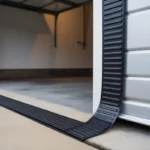
Garage doors may seem simple, but their smooth operation depends on well-maintained tracks. By understanding the signs of track damage, performing regular maintenance, and knowing when to call professionals, you can keep your garage door operating safely and efficiently for years. Regularly checking related components such as the garage door seal also helps protect the system from dust, water, and debris that can affect track performance.
Remember the Thompsons’ case: a little attention to track issues prevented a much bigger problem down the road. Whether you’re performing DIY repairs or calling in the experts, garage door track repair is key to home safety, durability, and everyday convenience.
FAQs
How much does it cost to replace garage door tracks?
Replacing garage door tracks usually costs $150–$400, depending on track type, labor, and any additional repairs. Professional installation ensures proper alignment and safety.
What are common garage door rail problems?
Common garage door rail problems include bent or misaligned tracks, loose brackets, worn rollers, and debris buildup, all of which can affect smooth door operation.
How to replace a door track safely?
To replace a door track safely: disconnect power, remove the door from the track, install the new track, secure brackets, realign, and test the door. Professional help is recommended for heavy doors.
Can sliding door tracks be repaired?
Yes, sliding door tracks can often be repaired by realigning, cleaning, and lubricating. Severely bent or damaged tracks may require full replacement.
Is it cheaper to repair or replace a garage door?
Minor issues like bent tracks or rollers are cheaper to repair. Full replacement is only necessary for severe damage or outdated doors.