Garage doors are one of the most used entry points in a home, yet many homeowners overlook the vital components that keep them functioning safely. Among these, the garage door cables play a critical role in balancing the door’s weight and ensuring smooth operation. Over time, wear and tear can cause these cables to fray, snap, or malfunction, leading to potentially dangerous situations. Understanding the signs, replacement process, costs, and safety measures is essential for every homeowner.
In this guide, I’ll share practical tips, personal experiences, and a real-life case study to help you navigate garage door cable replacement effectively. Whether you’re considering a DIY approach or hiring a professional, this article provides a complete roadmap.
Content
Garage Door Cable Replacement: Understanding How Cables Work
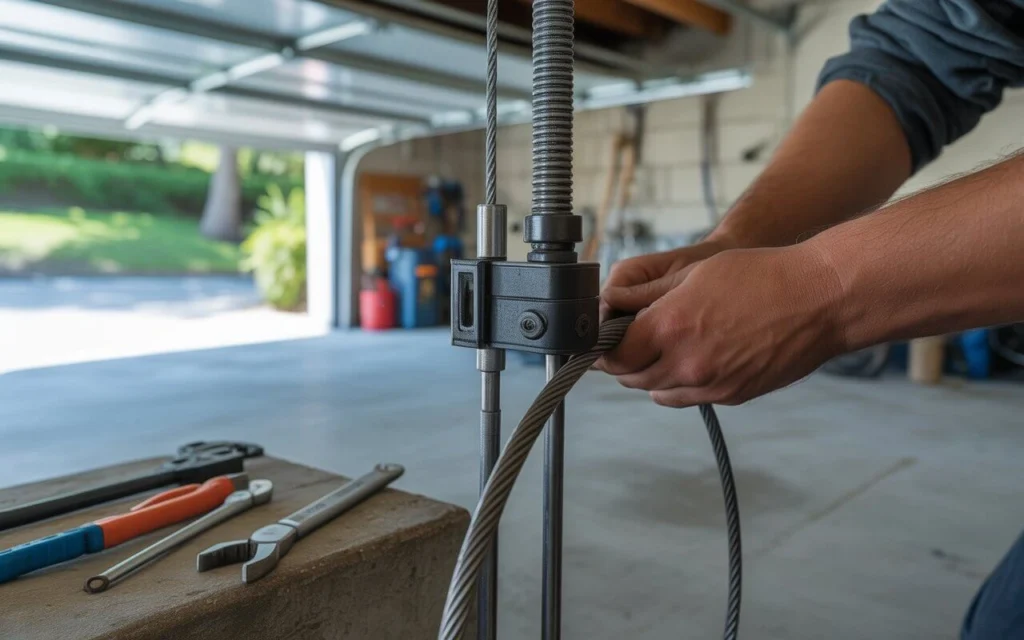
Before starting a garage door cable replacement, it’s essential to understand the role of these cables. Garage door cables are tightly wound steel ropes connected to the door’s torsion springs and drum system. Their primary job is to counterbalance the door’s weight, allowing it to lift smoothly and safely with minimal effort.
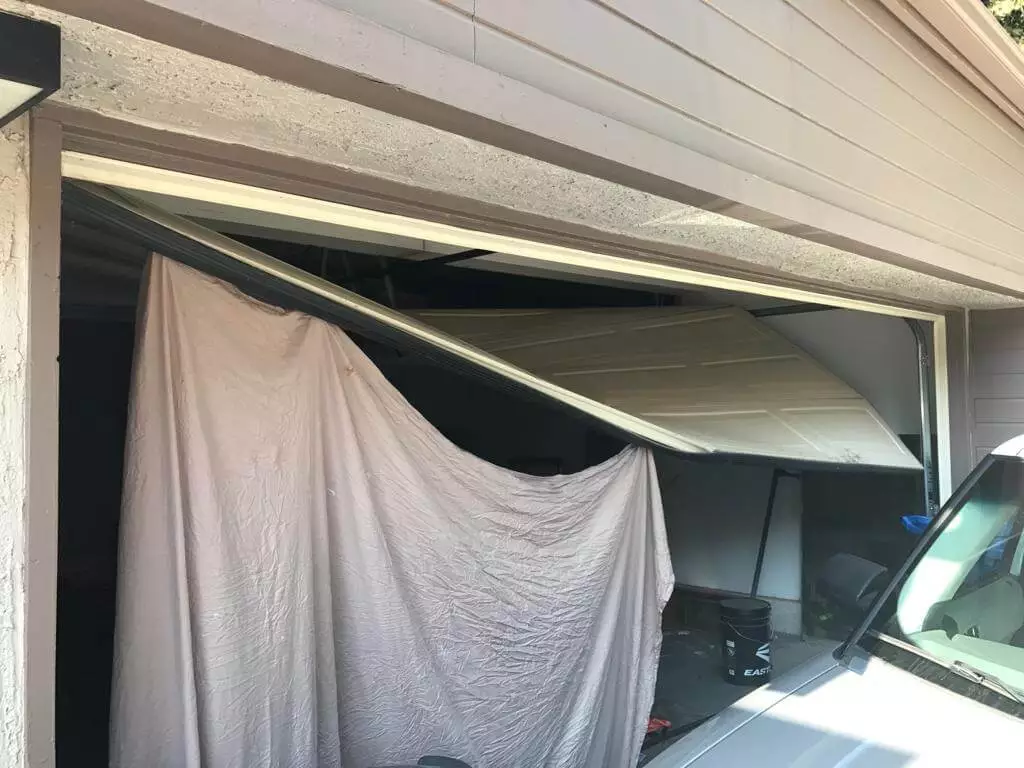
When cables are worn or damaged, operating the garage door can become hazardous. A snapped or frayed cable may cause the door to drop unexpectedly, risking injury or property damage. In my experience as a garage door quality expert, I’ve seen small cable issues ignored for months, only to escalate into major failures that could have been prevented with timely garage door cable replacement.
Signs You Need Garage Door Cable Replacement
Identifying cable issues early can save you both money and frustration. Here are the most common signs of trouble:
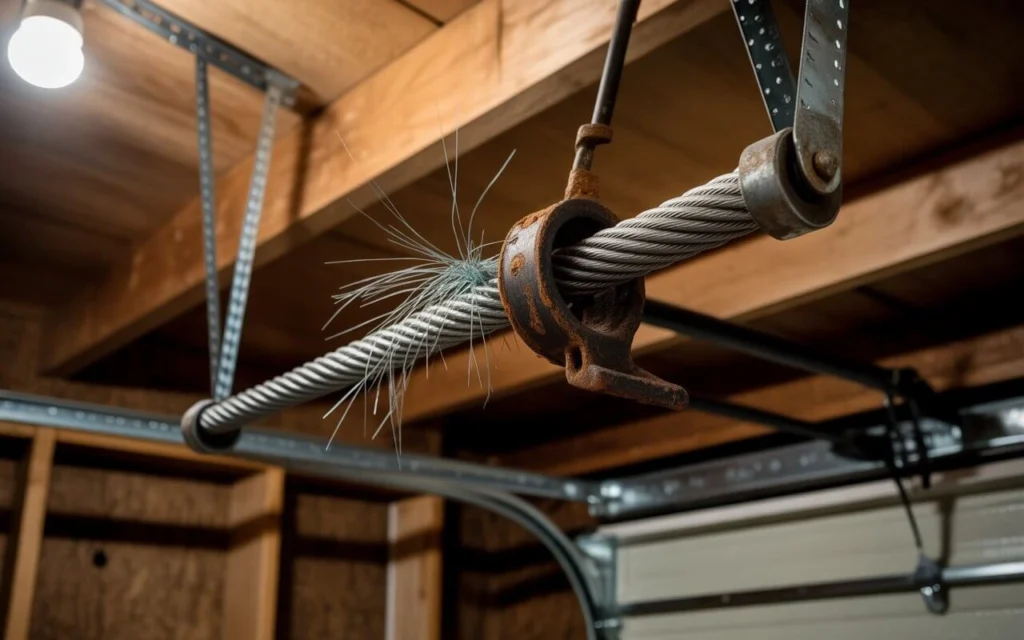
Visible fraying or rust along the cable strands
Uneven door movement, such as tilting when opening
Loud or unusual noises like snapping, grinding, or popping
Door not staying open or struggling to lift
Broken cable strands hanging near the drum
A friend of mine recently ignored these signs on his garage door. One morning, the cable snapped entirely, and the door came crashing down, luckily without causing injury. This real-life scenario reinforces why early detection and garage door cable maintenance is crucial.
Garage Door Cable Replacement Process: Step by Step
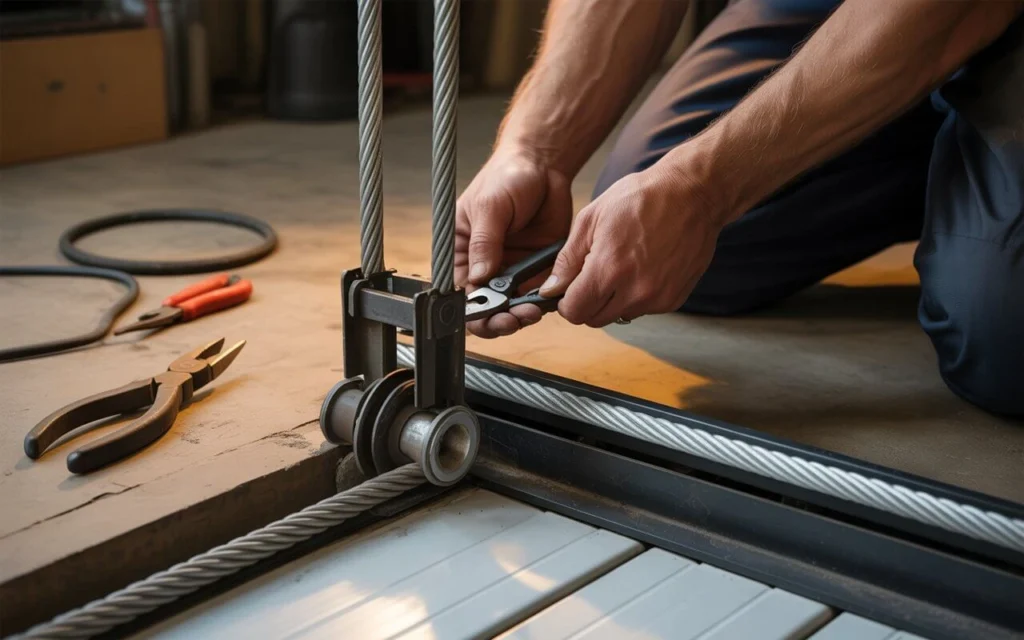
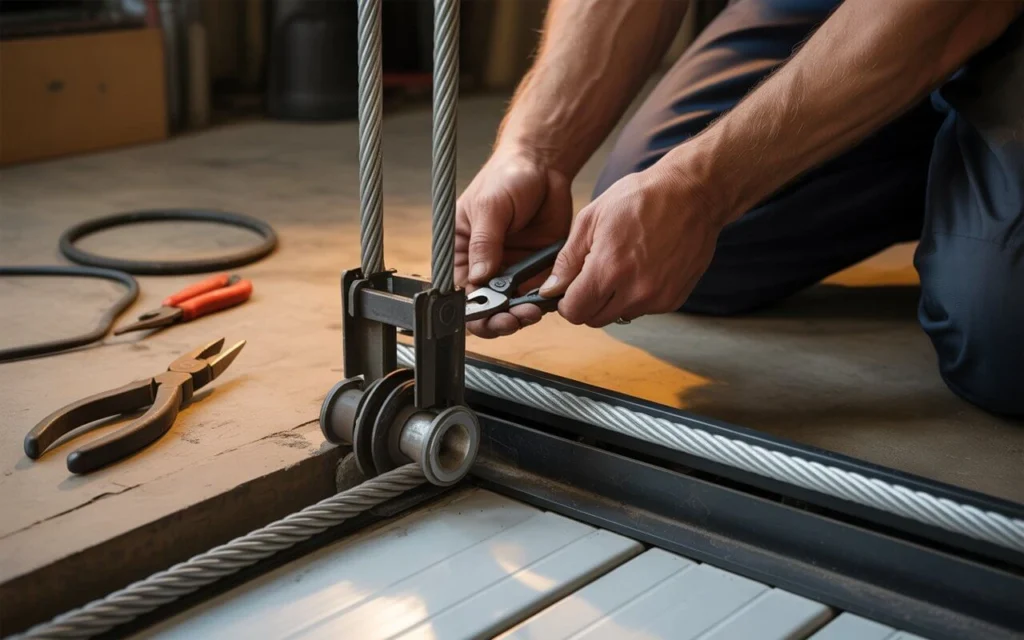
Replacing garage door cables can be risky due to the high tension in torsion springs, so safety should always be your top priority. Here’s a step-by-step overview of the process I follow professionally:
1. Safety Inspection
Always disconnect the garage door opener
Wear protective gloves and safety glasses
Inspect the door, springs, and existing cables for additional wear
2. Disengage and Secure the Door
Clamp the door to prevent accidental movement
Slowly lift to relieve tension on the existing cables
3. Remove the Damaged Cable
Unwind the cable from the drum
Carefully detach it from the bottom bracket
Inspect other components (rollers, drums, springs) for wear
4. Install the New Cable
Attach the cable to the bottom bracket
Wind the cable evenly on the drum
Ensure the cable is properly aligned and tensioned
Pro Tip: Some homeowners wonder, “Can you replace garage door cables yourself?” While minor adjustments are feasible, professional replacement is safer, especially for doors with high-tension torsion springs.
Cost of Garage Door Cable Replacement
Understanding costs upfront helps homeowners plan effectively. Replacement costs vary depending on:
Cable type and quality
Labor fees (DIY vs professional)
Door size and complexity
Location and accessibility
On average, homeowners can expect to pay between $150 and $300 for professional cable replacement, while DIY kits can range from $50 to $100. Remember, choosing cheap cables or skipping proper installation can lead to frequent failures and higher long-term expenses.
Preventing Future Cable Issues
Maintenance can extend the life of your garage door cables and prevent unexpected failures. Here are some tips I recommend to homeowners:
Regular inspection: Check for fraying, rust, or wear every 6–12 months
Lubricate moving parts: Use a silicone-based spray on rollers, cables, and hinges
Avoid DIY adjustments on high-tension springs: Only trained professionals should handle them
Balance check: Ensure the door moves smoothly without tilting
Implementing these simple steps not only enhances safety but also reduces repair costs over time.
Real-Life Case Study: Preventing a Disaster
A homeowner in my neighborhood called me after noticing unusual noises and a slight tilt when opening his garage door. Upon inspection, I found a frayed cable on one side and minor damage on the other. We replaced the worn cable and adjusted the tension on both sides.
If he had ignored the signs, a snapped cable could have caused serious injury or damage to his vehicle. After the replacement, the door operated smoothly for over two years without any further issues. This case highlights the importance of timely garage door cable replacement and regular maintenance.
DIY vs Professional Garage Door Cable Replacement
While DIY enthusiasts may attempt cable replacement, there are significant risks:
High tension can cause serious injury if mishandled
Incorrect tensioning may damage the door or opener
Lack of experience may miss secondary issues like worn drums or rollers
Hiring a professional ensures:
Proper cable type and installation
Balanced door operation
Safety of your family and property
As a garage door expert, I always recommend calling a trusted professional if you’re not fully confident in your DIY skills.
Why Timely Garage Door Cable Replacement Matters
Replacing your garage door cables promptly ensures:
Safety: Prevents accidental door drops or injuries
Smooth operation: Reduces strain on springs and openers
Longevity: Extends the life of the door and related components
Cost savings: Avoids emergency repairs or damage
Think of cables as the lifelines of your garage door system. Ignoring them is like skipping oil changes on your car — minor neglect can quickly lead to major problems.
Final Thoughts
Garage doors are often overlooked, yet they’re one of the most critical and frequently used components of a home. Understanding the role of garage door cables, recognizing signs of wear, and knowing the proper replacement process can save homeowners from dangerous accidents and costly repairs.Whether you decide to attempt DIY cable replacement or hire a professional, regular inspection and preventive maintenance are key. Remember, timely action not only protects your home but also ensures smooth, reliable operation for years to come.
FAQs
How do I know what size garage door cable I need?
Check your door type and spring system; proper sizing ensures safe garage door cable replacement.
What is the cable on a garage door called?
It’s called a garage door cable, attached to torsion springs and drums for balance.
How often should I replace garage door cables?
Inspect cables yearly; replace when frayed, rusted, or during regular garage door cable maintenance.
Should I replace both garage door cables at once?
Yes—replacing both ensures balanced movement and reduces future wear.
What thickness is garage door cable?
Common sizes include 1.5 mm or 2.5 mm depending on door weight and type.